Cornell University-Case Study -Clover Brooke Farm
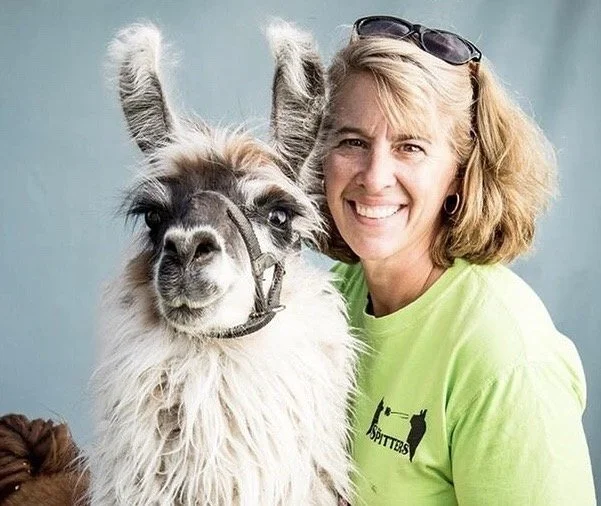
From pasture to print—proud to share the Clover Brooke Farm story! 🦙🌿
AGRITOURISM CASE STUDY
October 2026 AGRITOURISM CASE STUDY
Clover Brooke Farm
Hyde Park, New York • Founded 2008 • Dutchess County
Cornell Cooperative Extension — Agritourism Case Study Series
Interview subject: Andrea Parent-Tibbetts, Owner and Operator
“Our mission is to connect people through agriculture — hands-on, experiential learning that educates,
inspires, and creates lasting connections between visitors, animals, fiber, and the land.”
OVERVIEW
Ask Andrea Parent-Tibbetts how Clover Brooke Farm got its name, and the story starts with an 8-year-
old and a 4-H project. In 2008, Andrea and her husband brought home two goats, named Clover and
Daisy, so their older daughter could join 4-H. The farm took its name from that first goat and from
Brooke, their daughter's middle name.
In 2016, the family relocated to their current 45-acre property in Hyde Park, New York, which allowed
them to expand into livestock, fiber production, educational programming, and agritourism. In 2025 they
purchased a second property nearby, the Hudson Valley Equine Center, to grow into equine-assisted
learning and restorative programming.
Andrea didn't come from farming. She spent thirty years as a school administrator, most recently as a
director of finance and operations at private schools — a background, she says, that turned out to be
surprisingly well-suited to running a small business. What she did not know, quite yet, was what kind of
farm she was building.
Today, Clover Brooke Farm produces roughly 350 pounds of raw fiber a year from a herd of llamas,
alpacas, goats, and sheep, processed into yarn and other fiber goods. It hosts summer camps for city kids
who have never touched a llama. It offers Airbnb farm stays. They have also been on the Today Show,
Dr. Oz, and Rachel Ray. It runs fiber arts workshops in which visitors learn to turn raw fleece into
something they made with their hands. Its llama and alpaca hikes have a return rate of fifteen to twenty
percent — meaning one in five visitors comes back specifically to walk the same animals again.
Andrea sells experiences. Something that city visitors drive ninety minutes to find, and then book again
before they've left.
"To be honest, Agritourism is what pays the bills. Fiber farming does not net you enough
to continue to grow. So hence, the diversification."
Llama and alpaca hikes, farm tours, classes, summer camps, school trips, farm stays, and a rotating slate
of workshops now fill the calendar most weekends of the year, and the farm has been recognized as a
TripAdvisor Travelers' Choice award winner, among the top 10 percent of listings, two years running.
1
The farm is run almost entirely by Andrea, alongside her husband, a part-time college professor, and
their youngest daughter.
THE BIG IDEA
It was recognizing that the animals themselves, which were already being raised, already being handled,
already good with kids - were the resource worth building a business around. She is selling calmness.
“That's kind of what we could call agritourism, right?” Andrea says. “You use the resources you have,
with the hope that you can continue to build, or at least reinvest.” Andrea doesn’t just sell llama walks
though. Visitors arrive thinking they want to see exotic animals. What they discover, holding a lead rope
with a 350-pound alpaca walking beside them, is something quieter. Something they didn't know they
needed.
"This donkey was my spirit animal," visitors tell Andrea, with complete sincerity. They’ll be back.
HOW IT STARTED
The farm was established in 2008 with the goats but the agritourism didn't begin until the move to Hyde
Park in 2016, when Andrea had space and the animals.
The llamas and alpacas came first, originally for 4-H, and for the fiber they produced. The tourism came
later, once Andrea realized those same gentle, unusual animals were something visitors would pay to
spend time with. She used what she already had before spending what she didn't.
"We already had the llamas and alpacas because we had a 4-H club, and I was also using
them for fiber. Use the resources you have without reinvesting if you don't have to."
The farm's first agritourism offering, roughly six years ago, was a guided llama and alpaca hike. Andrea
is careful to clarify, walks. Not a petting zoo model, not a hands-off exhibit, but a structured forty-five-
minute walk with a trained guide, during which visitors learn about the individual animals, their
environment, their fiber, their needs, and “learn how each one is individual.”
What sets Clover Brooke Farm apart is that she launched her agritourism without a website.
"I wanted to kind of try to figure out what I wanted, but I wanted to get things started,
because I don't know what I need until I've started the process."
Instead of waiting until everything was ready, Andrea listed the hikes on Airbnb Experiences. The
platform takes twenty percent. She treated that twenty percent as her marketing budget since Airbnb
already has millions of users who are actively looking for something to do. Every customer who booked
through Airbnb was told, at the end of their visit: we're building our own website. When it's ready, you
can book directly for less.
2
That strategy of launching immediately, migrating your customers later, and incentivizing the switch
meant that Clover Brooke Farm was generating revenue and learning from real visitors before Andrea
had finished building the infrastructure. After two to three years, the website was ready and the
customers followed.
From there, the offerings multiplied: goat walks, donkey and mini-horse walks, farm tours, fiber-arts
classes, soap and skincare workshops, Bunnypalooza, even yoga classes, and eventually multi-week
summer day camps, now in their fifth year. Unlike many agritourism operations, food is deliberately
absent from the business. Andrea notes that the farm's entire identity is built around fiber, animals, and
education instead.
A second, distinct customer base grew out of the farm's education mission: school groups, including
several NYC-based programs. One partnership, with a summer program called New York Edge, brought
five student groups (about 150 kids) to the farm last year as an experiential-learning reward for students
who kept their grades up during the school year. “I think there's a lot of value in that,” Andrea says. “Our
audience are individuals who probably would never get out of the city, or never learn about this type of
scenario.”
The newest chapter began in 2025, with the purchase of the Hudson Valley Equine Center, a second
property that Andrea is now renovating to expand into equine-assisted learning, using the same playbook
that built Clover Brooke. They’ve embraced the growing interest in wellness tourism. With equine-
assisted programs combine the calming atmosphere of the farm with guided interactions with horses and
donkeys, creating experiences that promote relaxation, mindfulness, emotional well-being, and
meaningful connections to agriculture. Rather than serving as clinical therapy, these programs provide
restorative, nature-based experiences for veterans, individuals with disabilities, and community
members alike.
THE HARD MOMENTS
Ask Andrea what keeps her up at night, and the answer isn't the animals, the weather, or even the
workload. It's insurance.
New York State has no agritourism-specific insurance law, which means farms like Clover Brooke have
to piece together coverage from carriers that may not fully understand what they do. Andrea has found
exactly one insurance carrier willing to cover her operation — despite six years of running tours and
camps without a single claim.
“If, for some reason, this insurance company we're using decides they no longer want to do
agritourism, then my business folds. Immediately.”
3
“What's ironic is that what we're doing is pretty low risk. We're not riding animals, we're not
doing rodeos. However, our ability to be insured is more risky, by some of these standards,
than a rancher managing a herd of 1,200-pound cattle.”
The other recurring challenge is visitor expectations, particularly from a client base that is roughly 95
percent from New York City. “People feel that farms are public land,” Andrea says, “and they feel as
though they can just walk on anytime.” That assumption can be both a safety liability and an operational
one, since the farm still has to feed animals, run chores, and occasionally deal with a sick or dying
animal outside of tour hours. The farm has had to install fencing to physically separate working areas
from visitor areas, and adopted a strict no-walk-ins policy, and every visit requires a guide and a
reservation, no exceptions.
It is, Andrea says, the most important thing any farmer starting in agritourism needs to understand before
investing a dollar.
"The most important thing before they start, before they invest, is to make sure they've
secured an insurance broker and hopefully carriers who know exactly what you're doing
and what you'd like to grow."
BALANCING THE FARM AND THE FARM EXPERIENCE
Clover Brooke Farm runs public tours and hikes Friday through Sunday, and keeps weekdays reserved
for the farm itself: chores, animal care, off-site outreach to hosting school groups and camps that need a
trained guide's full attention.
Every visitor experience is guided, for both the animals' safety and so visitors actually learn something.
Guides are trained in-house, drawn mostly from Andrea's former 4-H club members or pre-vet students
from nearby Bard and Vassar Colleges, who need supervised large-animal hours before applying to
veterinary school. “It's a win-win for everyone,” Andrea says. “They're going to have to communicate
and work with individuals and talk about animals if they're a vet, so it's good practice for them, and it's
good for us.”
Andrea leans on booking software rather than a human assistant: a confirmation email when someone
books, a reminder three days out (after which cancellations are no longer accepted), a reminder at 48
hours, and a final note at 24 hours. “I don't have time to call people and remind them,” she says. “Why
not take advantage of these software models to facilitate that for you? There's a cost, but it's not the same
cost as hiring a human.”
WHAT THEY DISCOVERED
You just need an audience. When Clover Brooke launched its first llama and alpaca hikes, Andrea didn't
build a website. She used Airbnb's Experiences platform, which handled bookings and payment (for a
fee) while she figured out what the business actually needed. “I feel like I don't know what I need until
4
I've started the process,” she says. The farm ran on Airbnb alone for two to three years before building
its own site — and still keeps a presence on Airbnb, TripAdvisor, and Viator today, alongside two
Airbnb-listed farm-stay units added in 2024. This also gives your operation creditability with these
platforms.
We discovered that word of mouth is still the biggest marketing channel over traditional advertising.
Clover Brooke does no print advertising at all. Its core audience skews younger and lives almost entirely
on social media, so Andrea focuses on Instagram, with a lighter presence on Facebook and TikTok.
High-profile media appearances — the Today Show, Dr. Oz, Rachael Ray, Fox News — have helped,
mostly because they draw influencers to the farm who then post about it themselves.
agritourism with explicit animal-assisted learning.
"I think your biggest advertising is word-of-mouth referrals, which links right back to
social media,” she says. “When they tag you, and they talk about you — hey, what'd you
do this weekend? Oh, I went here!”
“I realized that if I could get into that area — invite influencers to the farm, go do high-
end promos — as silly and ridiculous as it is, sometimes you just gotta take one for the
team.”
Working with your regional tourism partners are worth cultivating. Clover Brooke works closely with
Destination Dutchess, the county's tourism promotion agency, which actively showcases local farms. “I
can reach out to them and say, will you do a little something on us, put it on your calendar, or maybe
your front page,” Andrea says. “That really has come a long way.”
Software may sometimes be cheaper than staff. When someone books a tour, they receive an automated
confirmations and gentle cancellation notices before their visit and “we're looking forward to seeing
you”. Andrea does not make these calls. A booking platform makes them. "We're not sitting around
waiting for a call. Let's use effective software to facilitate reservations and communications."
We underestimated how far a strong return rate could carry us. Fifteen to twenty percent of the visitors
who do a llama or alpaca hike come back the following year to do it again. They ask for the same
animal. They buy yarn made from that animal's fiber. They bring a friend. "They've found something
beneficial to their well-being. They recognize it's something they enjoy." That return rate is not an
accident — it is the product of a structured experience designed to create connection, not just
entertainment.
We discovered that city visitors want to know exactly what to expect. Ninety-five percent of Clover
Brooke Farm's visitors come from New York City. They arrive with expectations. The key is not to
lower expectations but to shape them accurately before they arrive. "Tell them what they're going to be
doing. Let them know what they can possibly expect. Animals are unpredictable — but I can tell you
that you're going to learn about the farm, hopefully have hands on the animals, and walk away with a
different appreciation of farming." Clover Brooke Farm has a 4.99 Google rating.
5
The best investment wasn't equipment. It was hiring 4-H alumni. Andrea's guides are, by design, people
who already know the animals. Former members of her 4-H club. Pre-vet students from Bard and Vassar
who need large-animal hours before applying to veterinary school. They already understand llamas and
alpacas. They already know how to talk about them. The training is minimal. The quality is immediate.
WHAT VISITORS REALLY WANT
What visitors say they want: to see animals, a llama hike, a fiber-arts class, an afternoon away from the
city.
What they actually want, according to Andrea: is a connection with one specific animal. A sense of
calmness they can't always find at home. Roughly 15 to 20 percent of hike visitors return every year,
often asking for the same animal by name.
“A lot of them come back and they ask for the same animal. And at that point, it's a nice
connection — if they want to make something with their fiber, they can buy a skein of yarn,
buy some roving, take a class, and create something with it. There's a lot of win-wins if I can
get them vested and keep coming back.”
Andrea has been working with an organization called Pet Partners for over fifteen years, doing animal-
assisted therapy with her animals. As that work deepened, she began to understand that what visitors
were experiencing on the hikes was not so different from what the therapy clients were experiencing in
structured sessions.
Animals create calm. That calm is what people are actually purchasing. The fiber and the workshops are
add-ons. The calm is the core product.
This understanding now shapes everything Andrea is building at her second farm — the Hudson Valley
Equine Center, where she plans to develop donkey walks and structured sensory experiences, overlaying
agritourism with explicit animal-assisted learning.
"The more I can get people hands-on with the animals, the more connection they have.
And that is another application of marketing, they come back because they felt good
about the situation. It wasn't my vision coming in, fully defined. But now I know this is the
importance — to educate, and to inspire lasting connections.”
Andrea sees the same dynamic play out at the farm's summer camps, where kids are invited to imagine
their own version of a farm, not necessarily one built for production. One camper wanted to raise frogs,
simply because he loved them and wanted to “come home from work and hang out with his frogs.”
Andrea's takeaway wasn't that the idea was impractical. It was that the instinct behind it which is caring
6
for something, land stewardship, tending to your own well-being — is exactly what she hopes every
visitor, adult or child, leaves the farm with a little more of.
“If we do not educate the next generation, some of the things we're doing will not continue.”
ADVICE FOR OTHER FARMERS
Get your insurance conversation right before you invest.
Have an honest conversation with a broker about what you're doing now and what you hope to grow
into, before you put money into new infrastructure or animals. It won't guarantee coverage stays in
place, but going in blind is worse.
Use what you already have before you buy something new.
Clover Brooke's first agritourism offering didn't require new capital but instead it repurposed animals the
family was already raising and already knew how to handle safely around people.
Let software carry the communication load.
Booking platforms and automated reminder sequences do the job of a full-time assistant at a fraction of
the cost, and they keep no-shows and confusion down without requiring a phone call from you.
Set expectations before people arrive, not after.
Telling visitors exactly what they will and won't be doing and being upfront that animals are
unpredictable can heed off most of the friction that comes from mismatched expectations.
Pay for the help you depend on.
Unreliable free labor costs more in missed shifts than a modest, accountable wage does, especially when
the “volunteers” you're recruiting are there for the animals, not the job.
Let the thing that pays the bills fund the thing you love.
Andrea's deepest passion is education and youth programming, which doesn't generate enough revenue
on its own. Agritourism - the hikes, the classes, the camps - is what makes the education possible. “It
always circles back to agritourism,” she says. “That's where we make money.”
7
FARMER'S CHEAT SHEET
The Idea Fiber farm that grew into guided animal hikes, fiber-arts classes,
school programs, camps, + farm stays
First Year Cost Low — built around llamas and alpacas the family already owned
for 4-H and fiber
Started With Two goats, guided llama/alpaca hike, launched on Airbnb
Experiences (20% fee = marketing budget)
Biggest Surprise 15-20% annual return rate — visitors come back to walk the same
animal again on hikes
Hardest Part Insurance: NY State has no agritourism law; only one carrier will
insure the farm
Most Profitable Add-on Farm stays via Airbnb accommodations — 6% platform fee vs. 20%
for Experiences
Marketing That Worked Word-of-mouth and social tagging, amplified by media appearances
(Today Show, Dr. Oz, Rachael Ray) and a strong regional tourism
partner
What They'd Do Sooner Secure insurance before investing, accountable staff earlier; keep
testing on low-cost platforms (Airbnb)
Would They Do It
Again?
Expanding to a second property in 2025- opening 2026
LESSONS FOR ANY FARM
These takeaways from Clover Brooke Farm apply whether you're raising fiber animals, growing
produce, or tapping maple:
✓ The question every farmer should ask before spending money is: what am I already doing that a
visitor would pay to be part of?
✓ Build your first offering out of resources you already own and already know how to manage safely.
✓ Talk to an insurance broker honestly, and early, about what you're doing now and what you want to
grow into — don't assume you're covered.
✓ Communicate constantly and precisely. Before the visit. At the visit. After the visit. Over-
communication is not annoying. Silence followed by a negative surprise is.
8
✓ Test a new experience on a low-cost platform (Airbnb, Eventbrite) before investing in a full website,
you won't know what you need until you've started.
✓ A strict no-walk-in, guide-required policy protects both visitor safety and your ability to actually get
farm work done.
✓ Treat every farm role — including tour guides — as a paid, accountable job rather than a volunteer
favor.
✓ Let automated booking and reminder emails carry the communication load instead of your own time.
✓ Cultivate your regional tourism promotion office as an active partner, not just a listing.
✓ It's fine if your favorite part of the work isn't what pays the bills — let agritourism fund it.
Clover Brooke Farm • Hyde Park, New York • Case study prepared by Cornell Cooperative Extension
Clover Brooke Farm
Hyde Park, New York • Founded 2008 • Dutchess County
Cornell Cooperative Extension — Agritourism Case Study Series
Interview subject: Andrea Parent-Tibbetts, Owner and Operator
“Our mission is to connect people through agriculture — hands-on, experiential learning that educates,
inspires, and creates lasting connections between visitors, animals, fiber, and the land.”
OVERVIEW
Ask Andrea Parent-Tibbetts how Clover Brooke Farm got its name, and the story starts with an 8-year-
old and a 4-H project. In 2008, Andrea and her husband brought home two goats, named Clover and
Daisy, so their older daughter could join 4-H. The farm took its name from that first goat and from
Brooke, their daughter's middle name.
In 2016, the family relocated to their current 45-acre property in Hyde Park, New York, which allowed
them to expand into livestock, fiber production, educational programming, and agritourism. In 2025 they
purchased a second property nearby, the Hudson Valley Equine Center, to grow into equine-assisted
learning and restorative programming.
Andrea didn't come from farming. She spent thirty years as a school administrator, most recently as a
director of finance and operations at private schools — a background, she says, that turned out to be
surprisingly well-suited to running a small business. What she did not know, quite yet, was what kind of
farm she was building.
Today, Clover Brooke Farm produces roughly 350 pounds of raw fiber a year from a herd of llamas,
alpacas, goats, and sheep, processed into yarn and other fiber goods. It hosts summer camps for city kids
who have never touched a llama. It offers Airbnb farm stays. They have also been on the Today Show,
Dr. Oz, and Rachel Ray. It runs fiber arts workshops in which visitors learn to turn raw fleece into
something they made with their hands. Its llama and alpaca hikes have a return rate of fifteen to twenty
percent — meaning one in five visitors comes back specifically to walk the same animals again.
Andrea sells experiences. Something that city visitors drive ninety minutes to find, and then book again
before they've left.
"To be honest, Agritourism is what pays the bills. Fiber farming does not net you enough
to continue to grow. So hence, the diversification."
Llama and alpaca hikes, farm tours, classes, summer camps, school trips, farm stays, and a rotating slate
of workshops now fill the calendar most weekends of the year, and the farm has been recognized as a
TripAdvisor Travelers' Choice award winner, among the top 10 percent of listings, two years running.
1The farm is run almost entirely by Andrea, alongside her husband, a part-time college professor, and
their youngest daughter.
THE BIG IDEA
It was recognizing that the animals themselves, which were already being raised, already being handled,
already good with kids - were the resource worth building a business around. She is selling calmness.
“That's kind of what we could call agritourism, right?” Andrea says. “You use the resources you have,
with the hope that you can continue to build, or at least reinvest.” Andrea doesn’t just sell llama walks
though. Visitors arrive thinking they want to see exotic animals. What they discover, holding a lead rope
with a 350-pound alpaca walking beside them, is something quieter. Something they didn't know they
needed.
"This donkey was my spirit animal," visitors tell Andrea, with complete sincerity. They’ll be back.
HOW IT STARTED
The farm was established in 2008 with the goats but the agritourism didn't begin until the move to Hyde
Park in 2016, when Andrea had space and the animals.
The llamas and alpacas came first, originally for 4-H, and for the fiber they produced. The tourism came
later, once Andrea realized those same gentle, unusual animals were something visitors would pay to
spend time with. She used what she already had before spending what she didn't.
"We already had the llamas and alpacas because we had a 4-H club, and I was also using
them for fiber. Use the resources you have without reinvesting if you don't have to."
The farm's first agritourism offering, roughly six years ago, was a guided llama and alpaca hike. Andrea
is careful to clarify, walks. Not a petting zoo model, not a hands-off exhibit, but a structured forty-five-
minute walk with a trained guide, during which visitors learn about the individual animals, their
environment, their fiber, their needs, and “learn how each one is individual.”
What sets Clover Brooke Farm apart is that she launched her agritourism without a website.
"I wanted to kind of try to figure out what I wanted, but I wanted to get things started,
because I don't know what I need until I've started the process."
Instead of waiting until everything was ready, Andrea listed the hikes on Airbnb Experiences. The
platform takes twenty percent. She treated that twenty percent as her marketing budget since Airbnb
already has millions of users who are actively looking for something to do. Every customer who booked
through Airbnb was told, at the end of their visit: we're building our own website. When it's ready, you
can book directly for less.
2That strategy of launching immediately, migrating your customers later, and incentivizing the switch
meant that Clover Brooke Farm was generating revenue and learning from real visitors before Andrea
had finished building the infrastructure. After two to three years, the website was ready and the
customers followed.
From there, the offerings multiplied: goat walks, donkey and mini-horse walks, farm tours, fiber-arts
classes, soap and skincare workshops, Bunnypalooza, even yoga classes, and eventually multi-week
summer day camps, now in their fifth year. Unlike many agritourism operations, food is deliberately
absent from the business. Andrea notes that the farm's entire identity is built around fiber, animals, and
education instead.
A second, distinct customer base grew out of the farm's education mission: school groups, including
several NYC-based programs. One partnership, with a summer program called New York Edge, brought
five student groups (about 150 kids) to the farm last year as an experiential-learning reward for students
who kept their grades up during the school year. “I think there's a lot of value in that,” Andrea says. “Our
audience are individuals who probably would never get out of the city, or never learn about this type of
scenario.”
The newest chapter began in 2025, with the purchase of the Hudson Valley Equine Center, a second
property that Andrea is now renovating to expand into equine-assisted learning, using the same playbook
that built Clover Brooke. They’ve embraced the growing interest in wellness tourism. With equine-
assisted programs combine the calming atmosphere of the farm with guided interactions with horses and
donkeys, creating experiences that promote relaxation, mindfulness, emotional well-being, and
meaningful connections to agriculture. Rather than serving as clinical therapy, these programs provide
restorative, nature-based experiences for veterans, individuals with disabilities, and community
members alike.
THE HARD MOMENTS
Ask Andrea what keeps her up at night, and the answer isn't the animals, the weather, or even the
workload. It's insurance.
New York State has no agritourism-specific insurance law, which means farms like Clover Brooke have
to piece together coverage from carriers that may not fully understand what they do. Andrea has found
exactly one insurance carrier willing to cover her operation — despite six years of running tours and
camps without a single claim.
“If, for some reason, this insurance company we're using decides they no longer want to do
agritourism, then my business folds. Immediately.”
3“What's ironic is that what we're doing is pretty low risk. We're not riding animals, we're not
doing rodeos. However, our ability to be insured is more risky, by some of these standards,
than a rancher managing a herd of 1,200-pound cattle.”
The other recurring challenge is visitor expectations, particularly from a client base that is roughly 95
percent from New York City. “People feel that farms are public land,” Andrea says, “and they feel as
though they can just walk on anytime.” That assumption can be both a safety liability and an operational
one, since the farm still has to feed animals, run chores, and occasionally deal with a sick or dying
animal outside of tour hours. The farm has had to install fencing to physically separate working areas
from visitor areas, and adopted a strict no-walk-ins policy, and every visit requires a guide and a
reservation, no exceptions.
It is, Andrea says, the most important thing any farmer starting in agritourism needs to understand before
investing a dollar.
"The most important thing before they start, before they invest, is to make sure they've
secured an insurance broker and hopefully carriers who know exactly what you're doing
and what you'd like to grow."
BALANCING THE FARM AND THE FARM EXPERIENCE
Clover Brooke Farm runs public tours and hikes Friday through Sunday, and keeps weekdays reserved
for the farm itself: chores, animal care, off-site outreach to hosting school groups and camps that need a
trained guide's full attention.
Every visitor experience is guided, for both the animals' safety and so visitors actually learn something.
Guides are trained in-house, drawn mostly from Andrea's former 4-H club members or pre-vet students
from nearby Bard and Vassar Colleges, who need supervised large-animal hours before applying to
veterinary school. “It's a win-win for everyone,” Andrea says. “They're going to have to communicate
and work with individuals and talk about animals if they're a vet, so it's good practice for them, and it's
good for us.”
Andrea leans on booking software rather than a human assistant: a confirmation email when someone
books, a reminder three days out (after which cancellations are no longer accepted), a reminder at 48
hours, and a final note at 24 hours. “I don't have time to call people and remind them,” she says. “Why
not take advantage of these software models to facilitate that for you? There's a cost, but it's not the same
cost as hiring a human.”
WHAT THEY DISCOVERED
You just need an audience. When Clover Brooke launched its first llama and alpaca hikes, Andrea didn't
build a website. She used Airbnb's Experiences platform, which handled bookings and payment (for a
fee) while she figured out what the business actually needed. “I feel like I don't know what I need until
4I've started the process,” she says. The farm ran on Airbnb alone for two to three years before building
its own site — and still keeps a presence on Airbnb, TripAdvisor, and Viator today, alongside two
Airbnb-listed farm-stay units added in 2024. This also gives your operation creditability with these
platforms.
We discovered that word of mouth is still the biggest marketing channel over traditional advertising.
Clover Brooke does no print advertising at all. Its core audience skews younger and lives almost entirely
on social media, so Andrea focuses on Instagram, with a lighter presence on Facebook and TikTok.
High-profile media appearances — the Today Show, Dr. Oz, Rachael Ray, Fox News — have helped,
mostly because they draw influencers to the farm who then post about it themselves.
agritourism with explicit animal-assisted learning.
"I think your biggest advertising is word-of-mouth referrals, which links right back to
social media,” she says. “When they tag you, and they talk about you — hey, what'd you
do this weekend? Oh, I went here!”
“I realized that if I could get into that area — invite influencers to the farm, go do high-
end promos — as silly and ridiculous as it is, sometimes you just gotta take one for the
team.”
Working with your regional tourism partners are worth cultivating. Clover Brooke works closely with
Destination Dutchess, the county's tourism promotion agency, which actively showcases local farms. “I
can reach out to them and say, will you do a little something on us, put it on your calendar, or maybe
your front page,” Andrea says. “That really has come a long way.”
Software may sometimes be cheaper than staff. When someone books a tour, they receive an automated
confirmations and gentle cancellation notices before their visit and “we're looking forward to seeing
you”. Andrea does not make these calls. A booking platform makes them. "We're not sitting around
waiting for a call. Let's use effective software to facilitate reservations and communications."
We underestimated how far a strong return rate could carry us. Fifteen to twenty percent of the visitors
who do a llama or alpaca hike come back the following year to do it again. They ask for the same
animal. They buy yarn made from that animal's fiber. They bring a friend. "They've found something
beneficial to their well-being. They recognize it's something they enjoy." That return rate is not an
accident — it is the product of a structured experience designed to create connection, not just
entertainment.
We discovered that city visitors want to know exactly what to expect. Ninety-five percent of Clover
Brooke Farm's visitors come from New York City. They arrive with expectations. The key is not to
lower expectations but to shape them accurately before they arrive. "Tell them what they're going to be
doing. Let them know what they can possibly expect. Animals are unpredictable — but I can tell you
that you're going to learn about the farm, hopefully have hands on the animals, and walk away with a
different appreciation of farming." Clover Brooke Farm has a 4.99 Google rating.
5The best investment wasn't equipment. It was hiring 4-H alumni. Andrea's guides are, by design, people
who already know the animals. Former members of her 4-H club. Pre-vet students from Bard and Vassar
who need large-animal hours before applying to veterinary school. They already understand llamas and
alpacas. They already know how to talk about them. The training is minimal. The quality is immediate.
WHAT VISITORS REALLY WANT
What visitors say they want: to see animals, a llama hike, a fiber-arts class, an afternoon away from the
city.
What they actually want, according to Andrea: is a connection with one specific animal. A sense of
calmness they can't always find at home. Roughly 15 to 20 percent of hike visitors return every year,
often asking for the same animal by name.
“A lot of them come back and they ask for the same animal. And at that point, it's a nice
connection — if they want to make something with their fiber, they can buy a skein of yarn,
buy some roving, take a class, and create something with it. There's a lot of win-wins if I can
get them vested and keep coming back.”
Andrea has been working with an organization called Pet Partners for over fifteen years, doing animal-
assisted therapy with her animals. As that work deepened, she began to understand that what visitors
were experiencing on the hikes was not so different from what the therapy clients were experiencing in
structured sessions.
Animals create calm. That calm is what people are actually purchasing. The fiber and the workshops are
add-ons. The calm is the core product.
This understanding now shapes everything Andrea is building at her second farm — the Hudson Valley
Equine Center, where she plans to develop donkey walks and structured sensory experiences, overlaying
agritourism with explicit animal-assisted learning.
"The more I can get people hands-on with the animals, the more connection they have.
And that is another application of marketing, they come back because they felt good
about the situation. It wasn't my vision coming in, fully defined. But now I know this is the
importance — to educate, and to inspire lasting connections.”
Andrea sees the same dynamic play out at the farm's summer camps, where kids are invited to imagine
their own version of a farm, not necessarily one built for production. One camper wanted to raise frogs,
simply because he loved them and wanted to “come home from work and hang out with his frogs.”
Andrea's takeaway wasn't that the idea was impractical. It was that the instinct behind it which is caring
6for something, land stewardship, tending to your own well-being — is exactly what she hopes every
visitor, adult or child, leaves the farm with a little more of.
“If we do not educate the next generation, some of the things we're doing will not continue.”
ADVICE FOR OTHER FARMERS
Get your insurance conversation right before you invest.
Have an honest conversation with a broker about what you're doing now and what you hope to grow
into, before you put money into new infrastructure or animals. It won't guarantee coverage stays in
place, but going in blind is worse.
Use what you already have before you buy something new.
Clover Brooke's first agritourism offering didn't require new capital but instead it repurposed animals the
family was already raising and already knew how to handle safely around people.
Let software carry the communication load.
Booking platforms and automated reminder sequences do the job of a full-time assistant at a fraction of
the cost, and they keep no-shows and confusion down without requiring a phone call from you.
Set expectations before people arrive, not after.
Telling visitors exactly what they will and won't be doing and being upfront that animals are
unpredictable can heed off most of the friction that comes from mismatched expectations.
Pay for the help you depend on.
Unreliable free labor costs more in missed shifts than a modest, accountable wage does, especially when
the “volunteers” you're recruiting are there for the animals, not the job.
Let the thing that pays the bills fund the thing you love.
Andrea's deepest passion is education and youth programming, which doesn't generate enough revenue
on its own. Agritourism - the hikes, the classes, the camps - is what makes the education possible. “It
always circles back to agritourism,” she says. “That's where we make money.”
7FARMER'S CHEAT SHEET
The Idea Fiber farm that grew into guided animal hikes, fiber-arts classes,
school programs, camps, + farm stays
First Year Cost Low — built around llamas and alpacas the family already owned
for 4-H and fiber
Started With Two goats, guided llama/alpaca hike, launched on Airbnb
Experiences (20% fee = marketing budget)
Biggest Surprise 15-20% annual return rate — visitors come back to walk the same
animal again on hikes
Hardest Part Insurance: NY State has no agritourism law; only one carrier will
insure the farm
Most Profitable Add-on Farm stays via Airbnb accommodations — 6% platform fee vs. 20%
for Experiences
Marketing That Worked Word-of-mouth and social tagging, amplified by media appearances
(Today Show, Dr. Oz, Rachael Ray) and a strong regional tourism
partner
What They'd Do Sooner Secure insurance before investing, accountable staff earlier; keep
testing on low-cost platforms (Airbnb)
Would They Do It
Again?
Expanding to a second property in 2025- opening 2026
LESSONS FOR ANY FARM
These takeaways from Clover Brooke Farm apply whether you're raising fiber animals, growing
produce, or tapping maple:
✓ The question every farmer should ask before spending money is: what am I already doing that a
visitor would pay to be part of?
✓ Build your first offering out of resources you already own and already know how to manage safely.
✓ Talk to an insurance broker honestly, and early, about what you're doing now and what you want to
grow into — don't assume you're covered.
✓ Communicate constantly and precisely. Before the visit. At the visit. After the visit. Over-
communication is not annoying. Silence followed by a negative surprise is.
8✓ Test a new experience on a low-cost platform (Airbnb, Eventbrite) before investing in a full website,
you won't know what you need until you've started.
✓ A strict no-walk-in, guide-required policy protects both visitor safety and your ability to actually get
farm work done.
✓ Treat every farm role — including tour guides — as a paid, accountable job rather than a volunteer
favor.
✓ Let automated booking and reminder emails carry the communication load instead of your own time.
✓ Cultivate your regional tourism promotion office as an active partner, not just a listing.
✓ It's fine if your favorite part of the work isn't what pays the bills — let agritourism fund it.
Clover Brooke Farm • Hyde Park, New York • Case study prepared by Cornell Cooperative Extension
Quisque iaculis facilisis lacinia. Mauris euismod pellentesque tellus sit amet mollis.